 DeMAP
Sign in
Start free
How common this is
In a Greenhouse survey of 2,950 job seekers in five countries, published in May 2026, 63% had been interviewed by AI, up 13 points in six months. It also found that 38% had dropped out of a hiring process over it, and 70% said AI was not clearly disclosed before their latest AI interview.
If you want the job, it is usually worth doing. These steps make it easier.
Before you start
- Ask what is measured. Ask the recruiter what the AI scores, and whether a person reviews the result.
- Test your setup. Check your microphone, camera, light and connection in advance.
- Read the instructions. Note whether you get retakes and how long you have per answer.
- Ask for adjustments if you have a disability, a strong accent concern or poor connectivity.
How to answer
- Answer the exact question. An AI cannot read your intent, so use the words from the question.
- Use a structure. STAR keeps you complete and on time.
- Use the job's terms. Say the skills and tools named in the job description, where they are true for you.
- Speak clearly and steadily. Short sentences help transcription.
- Mind the time. Practise finishing in 60 to 90 seconds.
- Do not wait for a reaction. There are no nods, so keep going to the end of your answer.
Rehearse with a voice
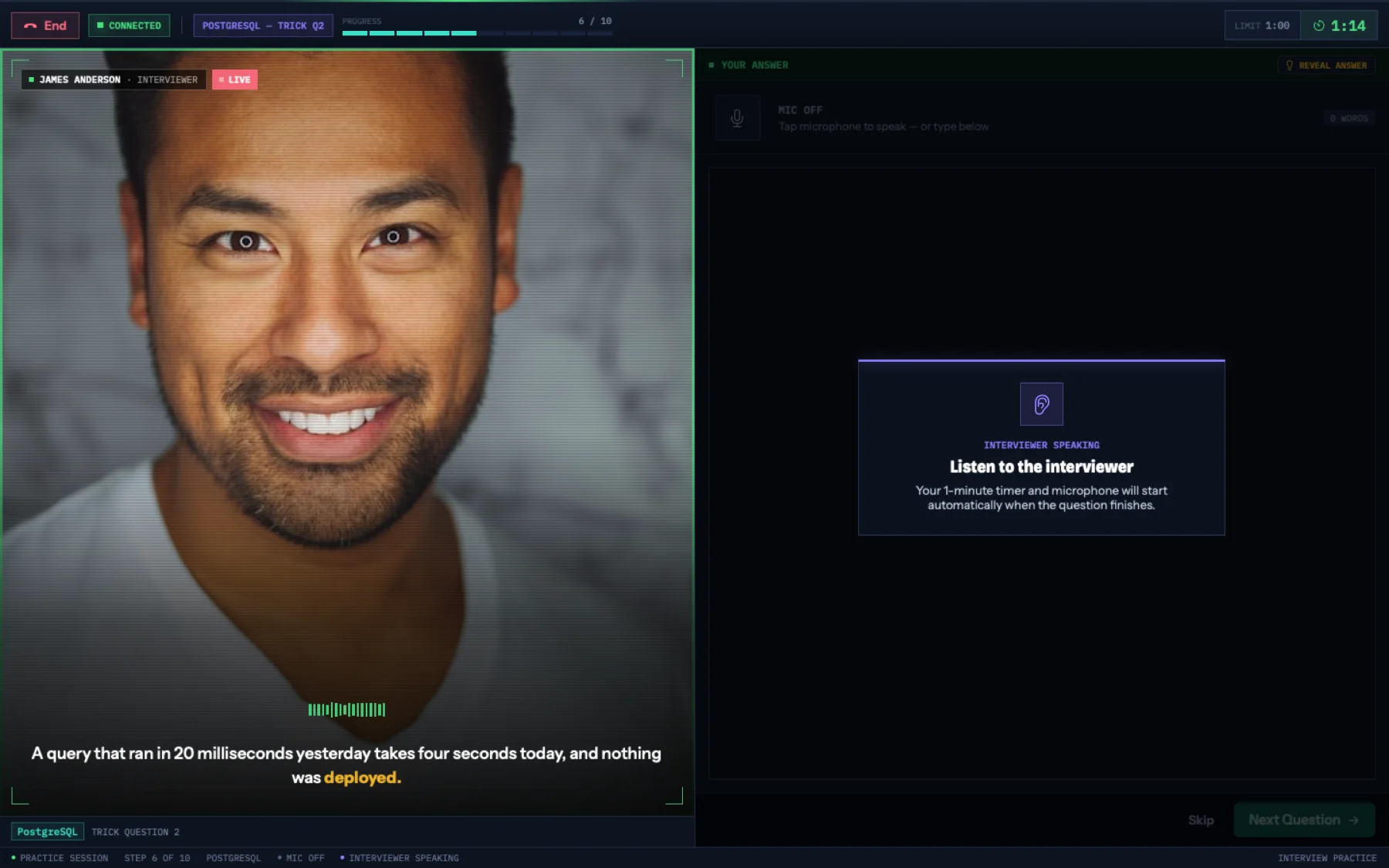
The strangest part is speaking to something that gives nothing back. Interview Practice puts you in that position: an interviewer on screen asks out loud, a timer runs and you answer. The report then shows what to fix in each answer.
Common questions
Can I ask for a human interviewer?
You can ask. Some employers offer one, especially as an adjustment. Asking politely will not usually harm you.
Is it all right to use notes?
Check the instructions. If notes are not mentioned, ask the recruiter. If live AI help is not allowed, keep to your own preparation. Read what is allowed.