 DeMAP
Sign in
Start free
Why practising out loud matters
Knowing an answer and saying it under pressure are different skills. Reading sample answers helps you think, but only speaking shows you where you run long, lose the thread or forget the result.
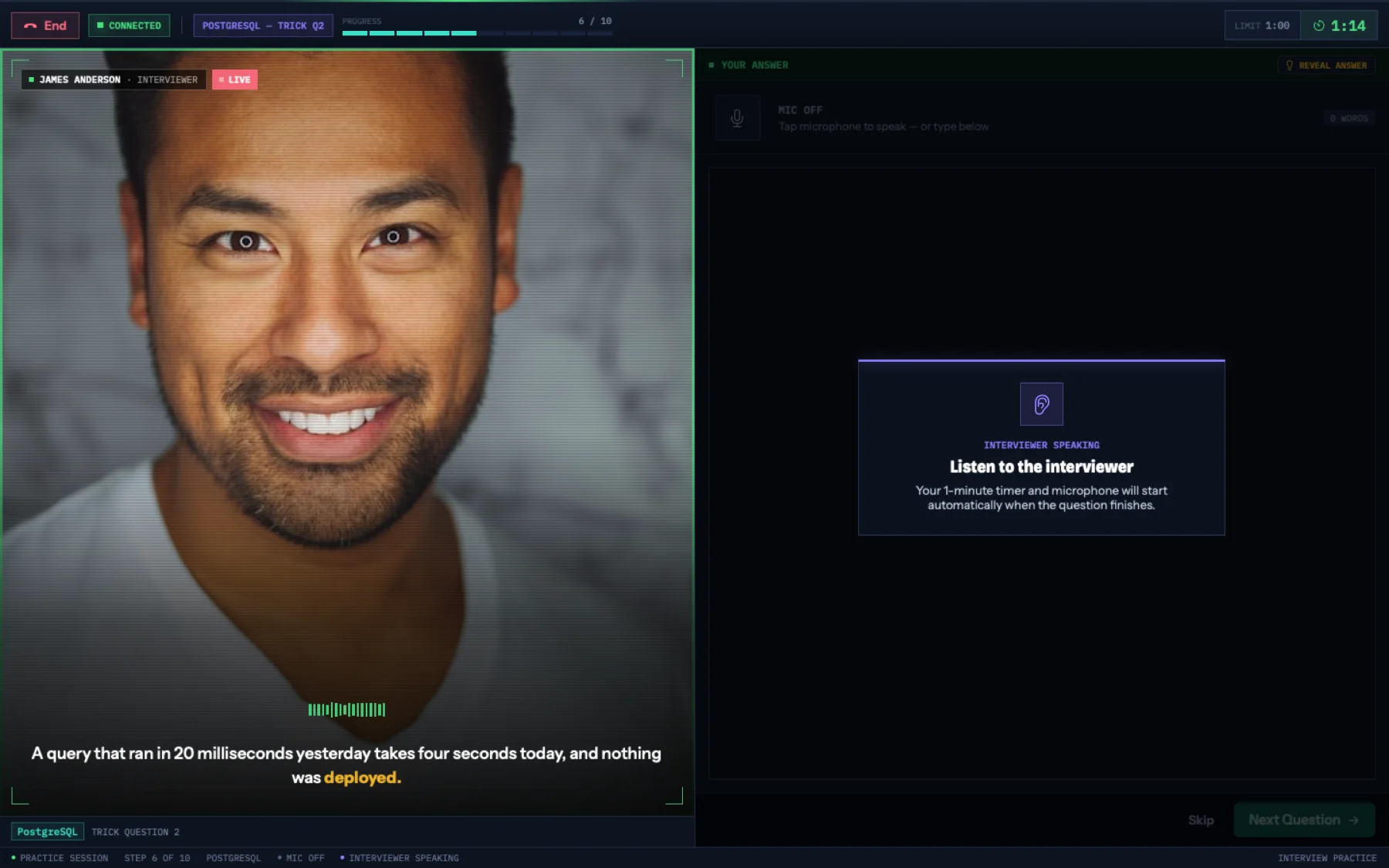
Interview Practice gives you that pressure at home. An interviewer on screen speaks each question, a timer starts and you answer.
How it works
- Set it up. Choose the role, your level, the technologies and the mix of basic, trick and coding questions. Add the job description and your resume if you like.
- It asks out loud. An interviewer on screen speaks each question, with captions, and a timer starts when it finishes.
- You answer. Use your voice or type, with a code editor for coding questions. Reveal a model answer when you are stuck.
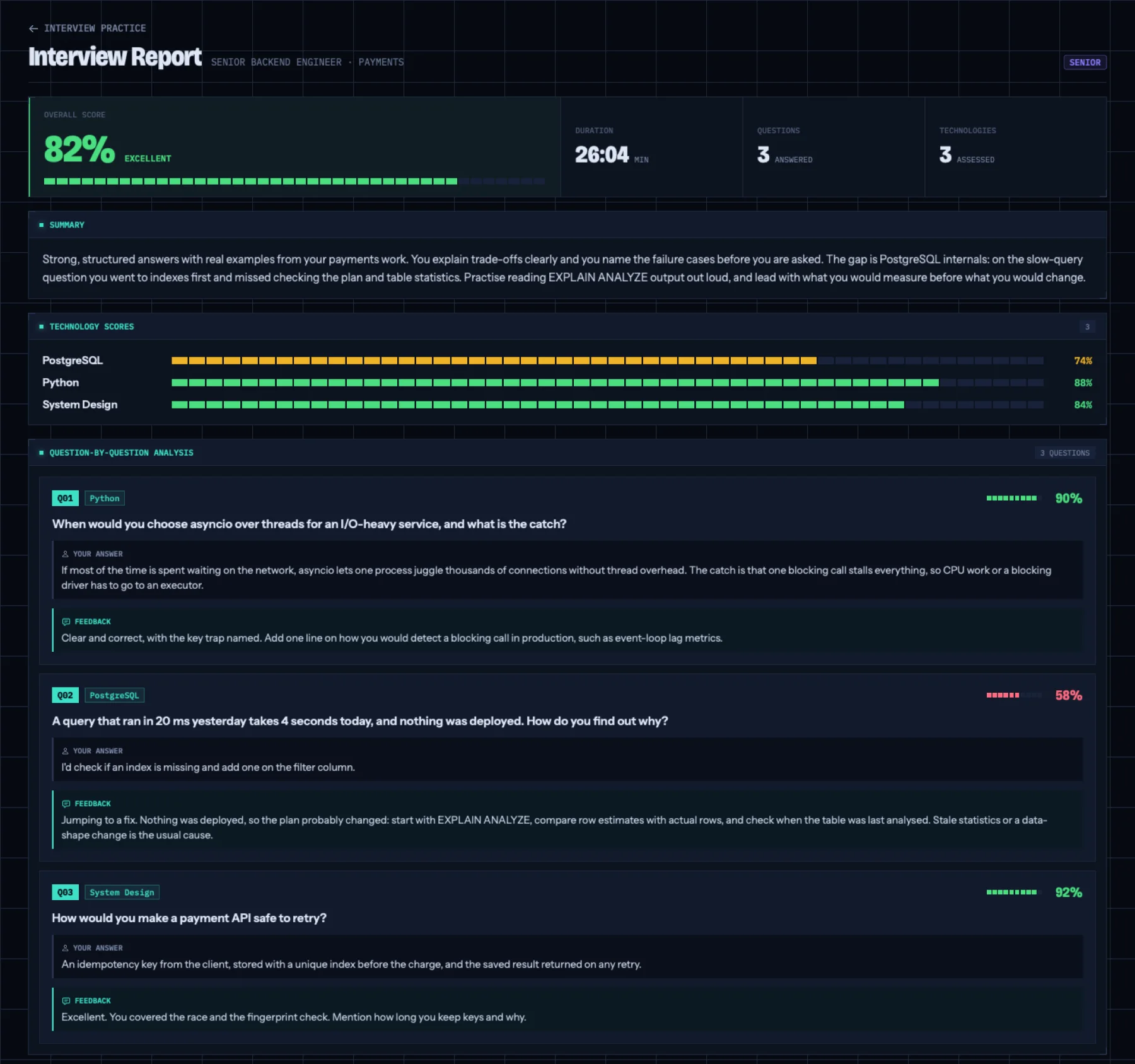
- You get the report. See an overall score, a score for each technology and what to fix in every answer.
What to practise for
- Technical rounds, with questions on the technologies you pick and a code editor for coding questions.
- Behavioural rounds, using your own projects. See how to structure stories.
- AI interviewers, which now screen many candidates. See how to prepare for one.
Languages
You can practise in 21 languages, including English (US, UK, India and Australia), Spanish, French, German, Dutch, Polish, Arabic, Hindi, Tamil, Telugu, Bengali, Japanese and Korean.
What it costs
Interview Practice is unlimited on the Monthly, Quarterly and Yearly plans, and practice interviews never count against your meetings or your withdrawal share. It is not part of the free interview or Pay As You Go.
Common questions
Can I practise for a specific job?
Yes. Add the job description and your resume, and the questions follow that role.
Do I have to speak?
No. You can type instead, though speaking is the better rehearsal.
Can I see a good answer?
Yes. You can reveal a model answer when you are stuck, and the report says what to fix in each answer.