 DeMAP
Sign in
Start free
The usual rounds
| Round | What they test | How to prepare |
|---|---|---|
| Recruiter screen | Fit, motivation, salary range | A clear story about why this role, in two minutes |
| Coding | Problem solving, code quality, communication | Practise talking while you code, and state complexity |
| System design | Trade-offs and scale | A repeatable structure, and diagrams you can draw |
| Behavioural | Ownership, conflict, growth | Five stories that can answer most questions |
Before you apply
Tailor your resume to each job. Interviewers often start from what is on it, so keep only what you can talk through in detail. Resume Architect shows which requirements your resume does not prove yet and asks you about each one.
Before the interview
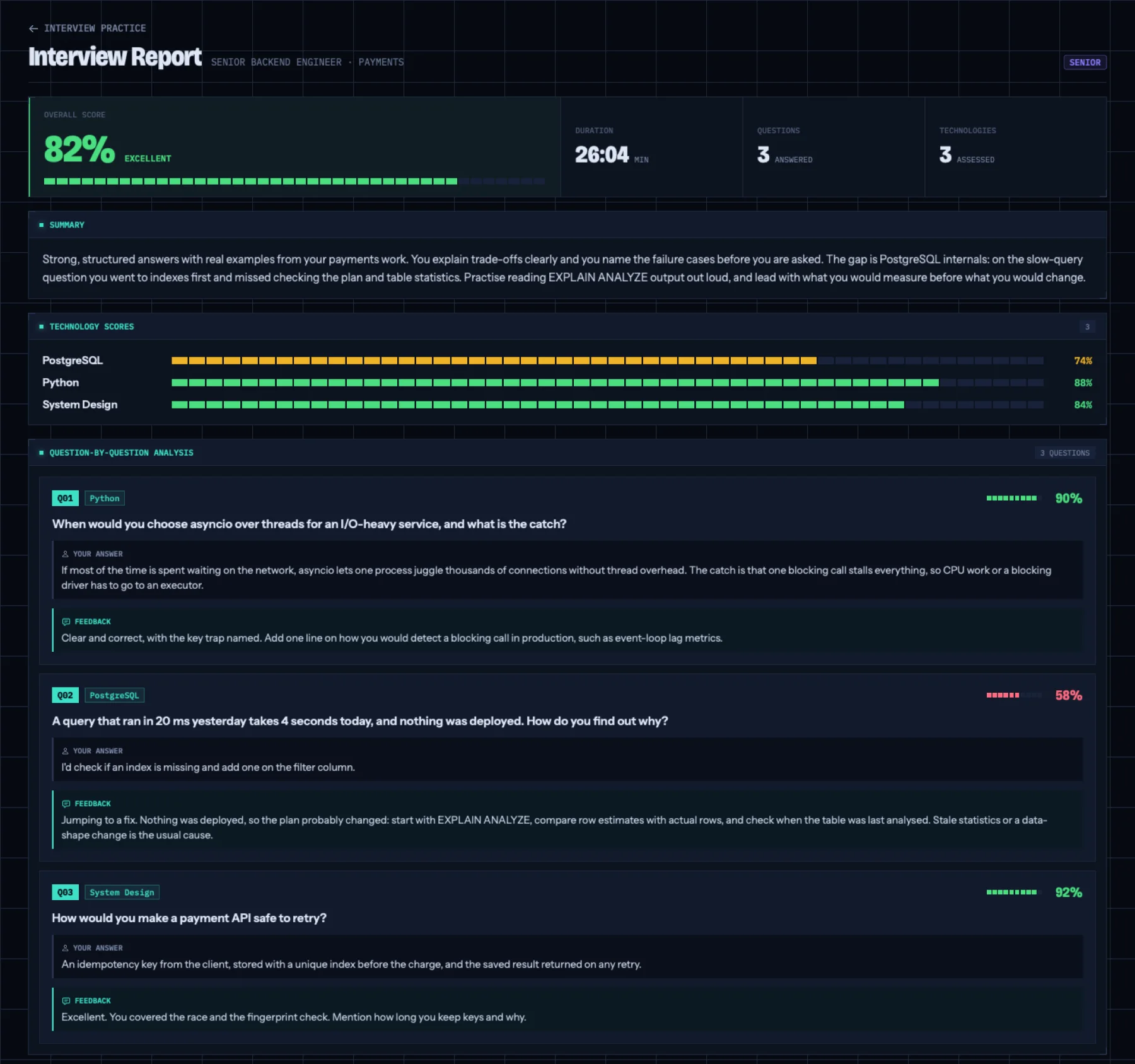
Rehearse out loud. Interview Practice lets you pick your technologies and the mix of basic, trick and coding questions. An interviewer on screen asks each one, and the report scores each technology and says what to fix.
During a coding round
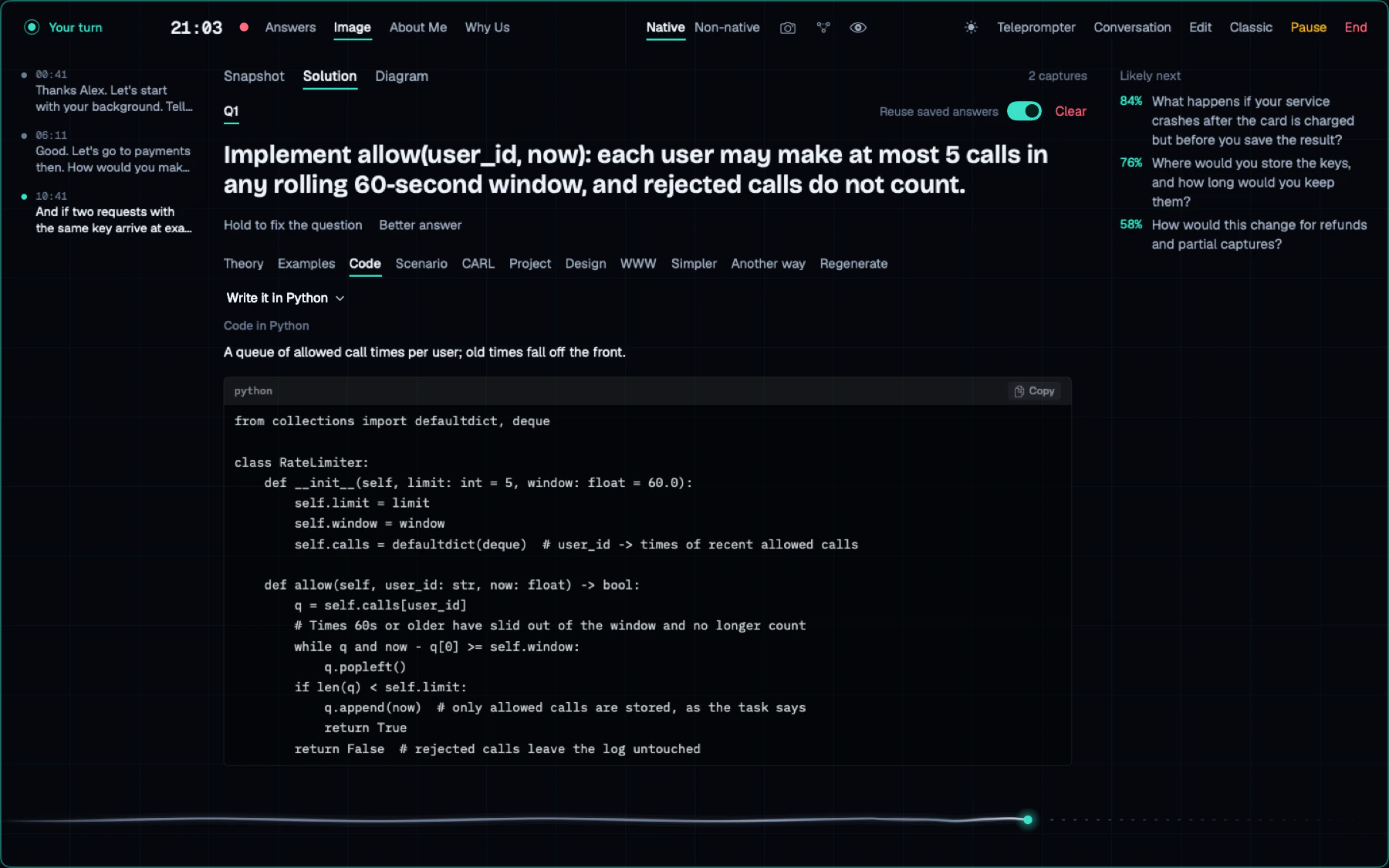
Where AI help is allowed, one shortcut captures the task on your screen. Each question gets the reasoning, working code and the complexity, and Simpler and Another way list the other approaches, easiest first.
Whatever tool you use, the interviewer is judging how you think. Say your approach before you write, name the trade-offs and test your code by hand. Read what is allowed before you use live help.
Common questions
What should I do first if my interview is next week?
Spend the first day on your stories and your resume, because they come up in every round. Then rehearse the rounds you find hardest out loud.
Which programming languages does DeMAP support?
You choose your language when you start a coding session, and answers are written in the language the task asks for.